


Some error occured while loading the Quick View. Please close the Quick View and try reloading the page.
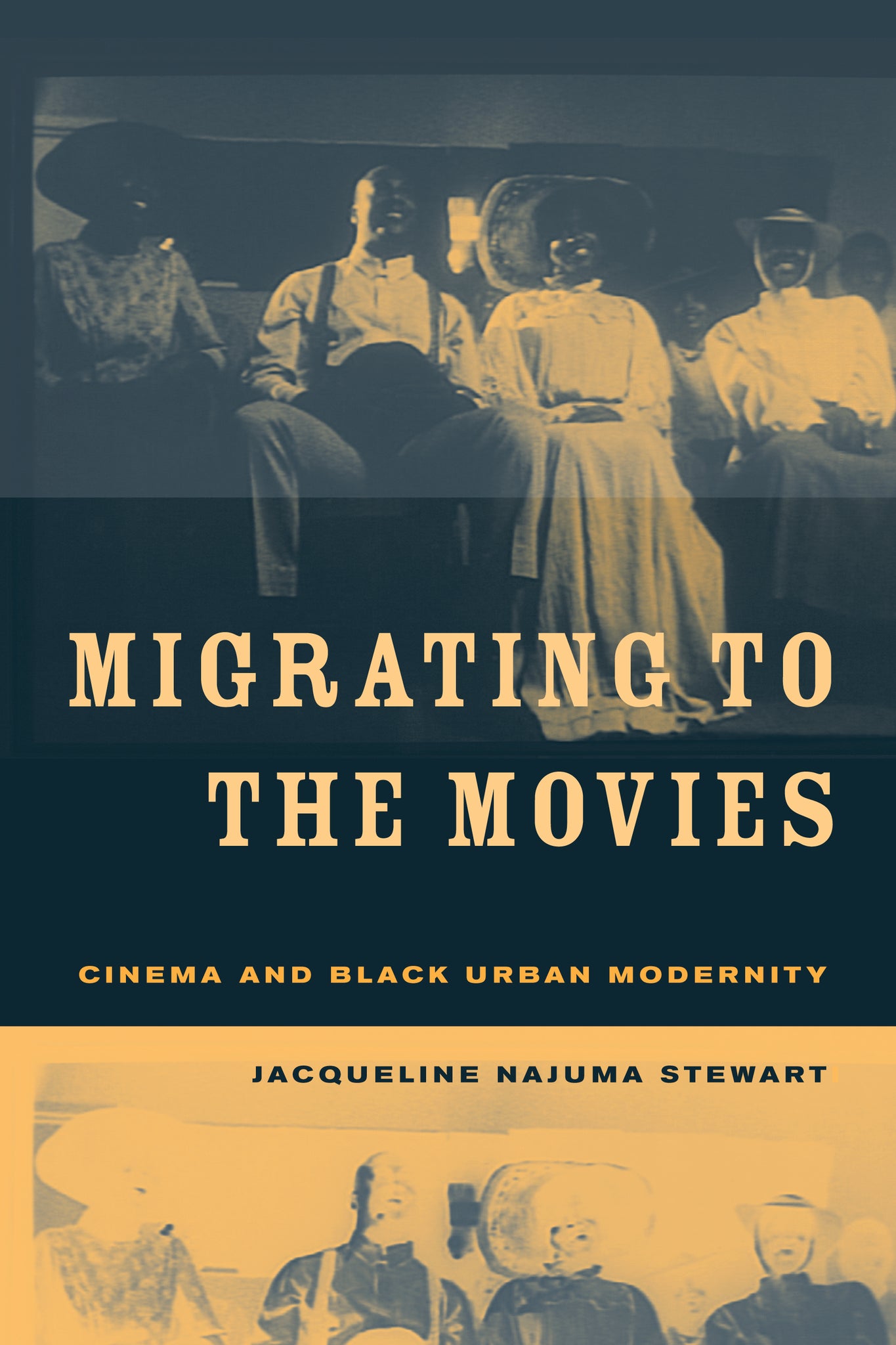
The rise of cinema as the predominant American entertainment around the turn of the last century coincided with the migration of hundreds of thousands of African Americans from the South to the urban "land of hope" in the North. This richly illustrated book, discussing many early films and illuminating black urban life in this period, is the first detailed look at the numerous early relationships between African Americans and cinema. It investigates African American migrations onto the screen, into the audience, and behind the camera, showing that African American urban populations and cinema shaped each other in powerful ways.
Focusing on Black film culture in Chicago during the silent era, Migrating to the Movies begins with the earliest cinematic representations of African Americans and concludes with the silent films of Oscar Micheaux and other early "race films" made for Black audiences, discussing some of the extraordinary ways in which African Americans staked their claim in cinema's development as an art and a cultural institution.
Focusing on Black film culture in Chicago during the silent era, Migrating to the Movies begins with the earliest cinematic representations of African Americans and concludes with the silent films of Oscar Micheaux and other early "race films" made for Black audiences, discussing some of the extraordinary ways in which African Americans staked their claim in cinema's development as an art and a cultural institution.

Price: $34.95
Pages: 367
Publisher: University of California Press
Imprint: University of California Press
Publication Date:
28 March 2005
Trim Size: 9.00 X 6.00 in
ISBN: 9780520233492
Format: Paperback
BISACs:
“Jacqueline Stewart's important study . . . is a welcome addition to the limited scholarship on the negative black stereotypes in early cinema, the experiences of black moviegoers, and the cultural evolution of African Americans in urban America. . . . The study should prove helpful to graduate students, film historians, and those researchers who understand that the early cinema developed as a popular leisure-time activity simultaneously with the movement of hundreds of thousands of southern African Americans to northern and midwestern cities during the Great Migraton.”
Jacqueline Najuma Stewart is a University of Chicago Professor of cinema studies and director of the nonprofit arts organization, Black Cinema House..
Contents
List of Illustrations
Preface
Acknowledgments
Introduction A Nigger in the Woodpile: Black (In)Visibility in Film History
Part One: Onto the Screen
Chapter 1. "To Misrepresent a Helpless Race": The Black Image Problem
Chapter 2. Mixed Colors: Riddles of Blackness in Preclassical Cinema
Part Two: Into the Audience
Chapter 3. "Negroes Laughing at Themselves"? Black Spectatorship and the Performance of Urban Modernity
Chapter 4. "Some Thing to See Up Here All the Time": Moviegoing and Black Urban Leisure in Chicago
Chapter 5. Along the "Stroll": Chicago’s Black Belt Movie Theaters
Part Three: Behind the Camera
Chapter 6. Reckless Rovers versus Ambitious Negroes: Migration, Patriotism, and the Politics of Genre in Early African American Filmmaking
Chapter 7 "We Were Never Immigrants": Oscar Micheaux and the Reconstruction of Black American Identity
Conclusion
Notes
Bibliography
Index
List of Illustrations
Preface
Acknowledgments
Introduction A Nigger in the Woodpile: Black (In)Visibility in Film History
Part One: Onto the Screen
Chapter 1. "To Misrepresent a Helpless Race": The Black Image Problem
Chapter 2. Mixed Colors: Riddles of Blackness in Preclassical Cinema
Part Two: Into the Audience
Chapter 3. "Negroes Laughing at Themselves"? Black Spectatorship and the Performance of Urban Modernity
Chapter 4. "Some Thing to See Up Here All the Time": Moviegoing and Black Urban Leisure in Chicago
Chapter 5. Along the "Stroll": Chicago’s Black Belt Movie Theaters
Part Three: Behind the Camera
Chapter 6. Reckless Rovers versus Ambitious Negroes: Migration, Patriotism, and the Politics of Genre in Early African American Filmmaking
Chapter 7 "We Were Never Immigrants": Oscar Micheaux and the Reconstruction of Black American Identity
Conclusion
Notes
Bibliography
Index